Costa Rica has been a retirement destination for North Americans for decades, and the system reflects that: the income thresholds are low, the process is well established, and there is one obligation that surprises nearly everyone.

The Caja is not optional
Every legal resident must enrol in and contribute to the Caja Costarricense de Seguro Social, the national health system.
Contributions are assessed on declared income and typically run 7 to 11 percent. You cannot opt out by holding private insurance, and compliance is checked when you renew residency.
What you get is genuine: universal coverage including prescriptions and hospital care, at a standard well above regional norms. The trade-off is waiting times for non-urgent specialist care.
Which is why most expats do both — pay the Caja because they must, and carry private cover for speed. Private consultations are inexpensive by US standards at $60–100 with an English-speaking specialist.
Budget for the Caja from day one. A couple declaring $3,000 a month is contributing $210–330 monthly, which is a real line rather than a formality.

Central Valley versus the coast
This is the decision that determines both your costs and your climate.
| Central Valley | Pacific coast | |
|---|---|---|
| Elevation | 1,000–1,400 m | Sea level |
| Climate | 20–26°C year round | 28–35°C, humid |
| 1-bed rental | $500–900 | $900–1,800 |
| Couple monthly | $2,000–2,800 | $2,800–4,000 |
| Air conditioning | Not needed | Constant |
| Hospitals | Best in country | Limited |
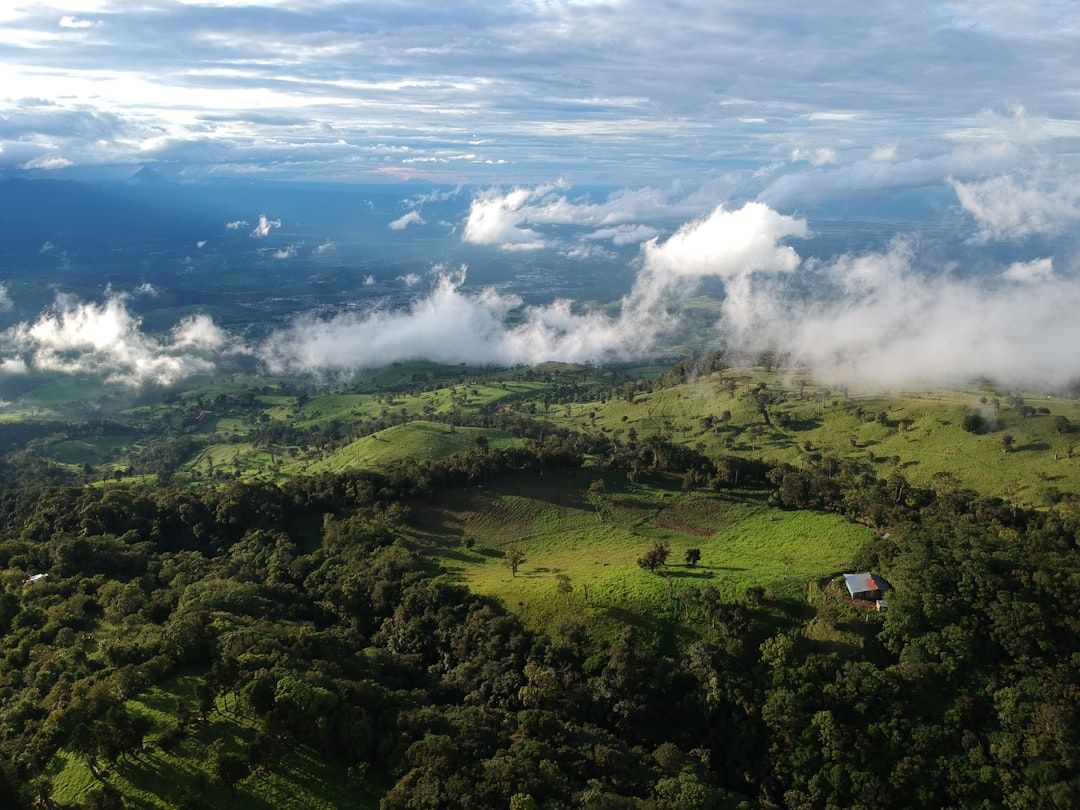
The Central Valley — San José, Escazú, Atenas, Grecia, San Ramón — is where most long-term residents actually settle, and the climate is the reason. At 1,000 metres and above it sits between 20 and 26°C year round with no air conditioning required, which locals call eternal spring and which removes the largest recurring utility cost in tropical living.
The Pacific coast — Tamarindo, Nosara, Manuel Antonio, Uvita — is what people picture. It is hotter, considerably more expensive, and seasonal in a way that catches people out.

The wet season
On the Pacific side, May to November is the rainy season with September and October the wettest.
In the beach towns this is not just weather — many restaurants and businesses close for those two months because the visitors are gone. A coastal town in October can be genuinely empty.
The Caribbean side runs on a different cycle and is frequently at its best in September, which is worth knowing if you are choosing between coasts.
The Central Valley gets afternoon rain but remains fully functional.
Import duties
The cost structure here is unusual and worth understanding before shipping anything.
Cars are roughly double US prices, used or new, because of import taxes. Electronics and appliances carry similar markups.
Local food, rent and labour are cheap. A weekly feria — farmers market — feeds a couple for very little, and domestic help and tradespeople are affordable.
The implication: a life built on local goods and produce costs little; a life built on imported American brands costs more than it would in America. This gap is larger in Costa Rica than in Mexico or Panama.
Practical notes
Residency takes nine to eighteen months and most people use a local attorney. You can remain in the country while the application is pending.
Territorial taxation means foreign-source income is generally not taxed locally. Americans still file US returns and FBAR.
Spanish matters more than the expat towns suggest. In Escazú and Tamarindo you can function in English; in Atenas or Grecia, where the value is, you will need Spanish within months.
Roads and driving are a genuine adjustment — poor signage, potholes, and mountain routes. A vehicle with clearance is worth more than a comfortable one.